Research workProjects
The green transition towards a sustainable and low-carbon economy is a key priority for the European Union and the Republic of Croatia, yet it is accompanied by complex financial, organisational, and institutional challenges. The IPZET project (Integrated Approach to the Economic Challenges of the Green Transition) is conducting a four-year research study that links the fields of finance, management, and public policy for a comprehensive insight into the economic aspects of the green transition. The three fundamental objectives of the project are: 1. To investigate the role of the financial sector and instruments in encouraging and financing the green transition, 2. To examine the organisational and managerial challenges of implementing the green transition, and 3. To research economic dynamics and innovation in the green transition - institutions, global risks, and economic resilience. Methodologically, the project combines econometric analyses of panel data, in-depth interviews with key stakeholders, and structural modelling of organisational factors. Expected results include a database of indicators for monitoring financial and institutional sustainability, scientific papers in journals indexed in the WoS/Scopus databases and internationally peer-reviewed publications, and practical guidelines for the financial sector and relevant stakeholders. In this way, the project directly supports EU climate neutrality goals and provides Croatian decision-makers and the business sector with analytical tools and recommendations for an accelerated, fair, and resilient green transition.
FIRST OBJECTIVE (C1): To investigate the role of the financial sector and instruments in encouraging and financing the green transition
The objective is to research the financial aspects of the green transition, assess the level of investment requirements, and determine how existing financial mechanisms can meet these needs in Croatia and the EU. The green transition requires significant investment—estimates indicate that an additional investment of approximately 2.7–3.7% of EU GDP per year is required by 2030 to achieve climate goals (SUERF, 2025). Most of these funds should be provided by the private sector, supported by public funds (e.g. budgets, EU funds) that mitigate risks (SUERF, 2025). The research will identify key financial sources (budgetary funds, EU funds, bank loans, green bonds, venture capital funds, ESG funds, etc.) and evaluate their role in financing green projects. Particular focus will be placed on the obstacles of limited funding sources, alongside the business uncertainty regarding the profitability of such investments. Furthermore, the role of financial institutions (banks, investment funds, insurers) in redirecting capital towards sustainable investments will be analysed. Recommendations will also be formulated for public policy decision-makers and financial intermediaries with the aim of further developing incentives to mobilise additional private funds.
SECOND OBJECTIVE (C2): To examine the organisational and managerial challenges of implementing the green transition
This objective focuses on green human resources and the changes within organisations required for a successful green transition, with a particular emphasis on employee behaviour. Within the framework of this research goal, key variables affecting the success of the green transition in enterprises will be analysed across individual, team, organisational, and managerial dimensions. Various green human resource practices that encourage desirable behaviours will be investigated—such as green training (see Paillé and Valéau, 2025), employee empowerment (see Murray and Holmes, 2021), and the development of green jobs focused on green skills—as well as their impact on organisational commitment and performance in the field of sustainability. Transformational and green transformational leadership will be analysed as leadership styles that foster the implementation of sustainable initiatives, green creativity, and green employee engagement, which will also be contextualised through employee satisfaction and commitment (see Cao et al., 2024), and potential employee turnover or retention within the organisation. Organisations that are among the first to integrate sustainability can potentially achieve a competitive advantage (better image, customer loyalty, easier access to eco-markets). The goal is to determine what distinguishes sustainability leaders from those lagging behind and how to encourage the broader mass of enterprises toward the organisational changes necessary for the green transition. The results will provide recommendations for change management—ranging from management education and involving employees in green initiatives to adapting organisational structure and culture.
THIRD OBJECTIVE (C3): To research economic dynamics and innovation in the green transition, including the role of institutions, the consequences of global risks, and economic resilience
The integration of renewable energy sources is key to decarbonisation and energy security within the green transition; however, this process faces challenges, particularly in the context of economic dynamics and regional imbalances within the EU and Croatia. According to the 2023 Global Risks Report, climate change and energy insecurity represent the greatest long-term threats to global stability (WEF, 2023). The European Green Deal aims for climate neutrality by 2050 through significant investments in clean energy, which requires the harmonisation of energy policies among EU member states. Nevertheless, regional imbalances in resources, development, and infrastructure may hinder the uniform implementation of these goals. Geopolitical shocks, such as the war in Ukraine, highlight the necessity of energy independence, while research shows that the energy transition not only reduces emissions but also strengthens European security (IMF, 2024). Therefore, within the framework of this objective, economic dynamics and economic resilience will be analysed, alongside the conditions for sustainable growth and employment in the context of global risks. Furthermore, it will be necessary to focus research attention on the role of institutions in shaping policies and the institutional framework that enable the effective implementation of the green transition, reduce regional imbalances, minimise resistance to change, and ensure more balanced development.
Prof. Đula Borozan, a member of the research team for the IPZET project – Integrated Approach to the Economic Challenges of the Green Transition, presented research results at the 5th scientific conference "Economic Encounters" of the Scientific Society of Economists, held on 12 and 13 December 2025 in Split.
The presentation, titled "Energy consumption under the influence of geopolitical risks and economic-policy uncertainty: the case of the European Union", provided research results on the impact of geopolitical risk (GPR), energy security risk (ESR), and economic-policy uncertainty (EPU) on final energy consumption in selected European Union countries during the period from 1995 to 2022. The research results indicate that energy security risk and economic-policy uncertainty have a negative and statistically significant impact on energy consumption, suggesting an increase in energy efficiency. Meanwhile, the combined effect of all three risks is statistically significant and should not be overlooked when creating strategic plans and energy policy measures.
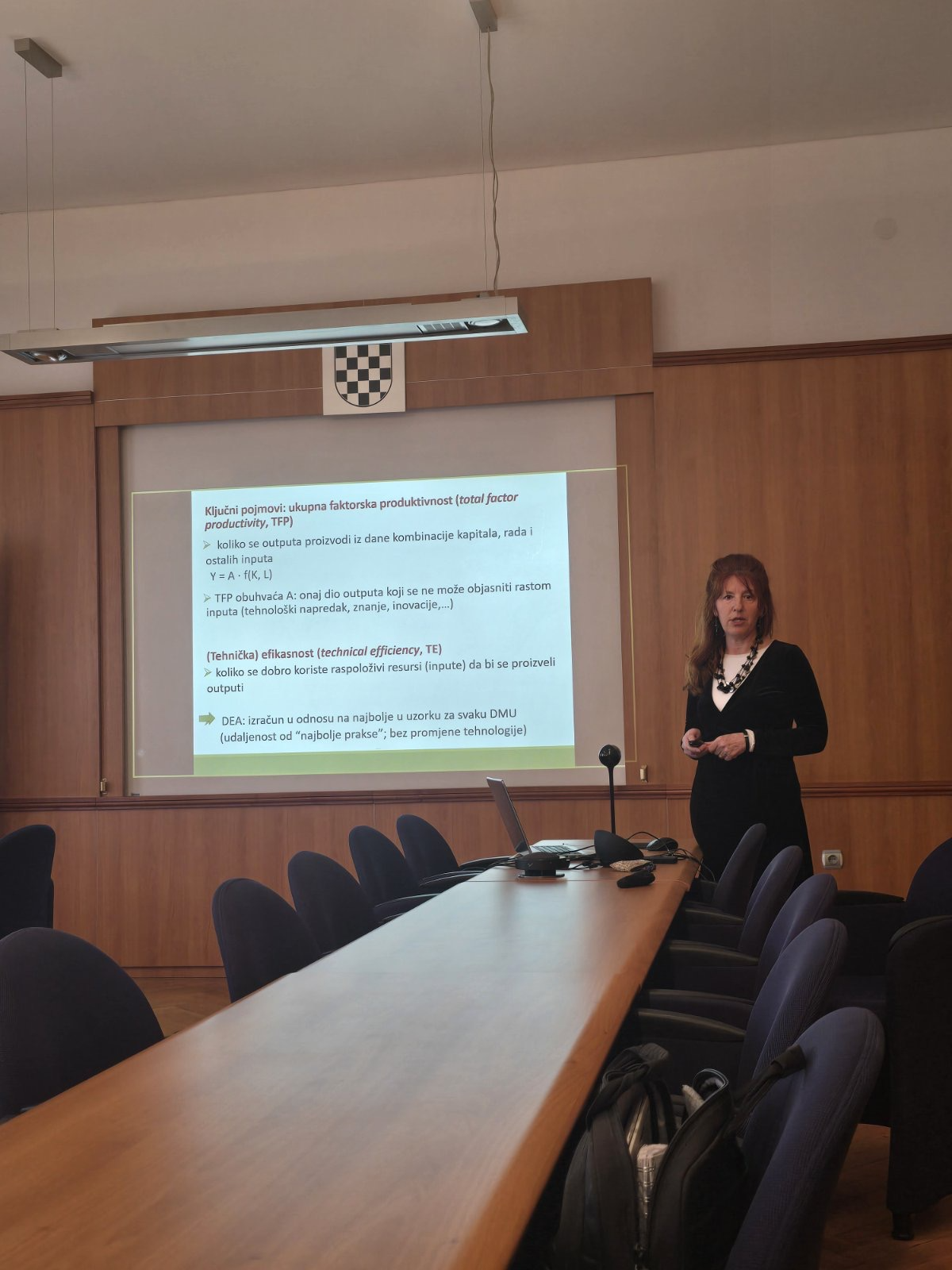
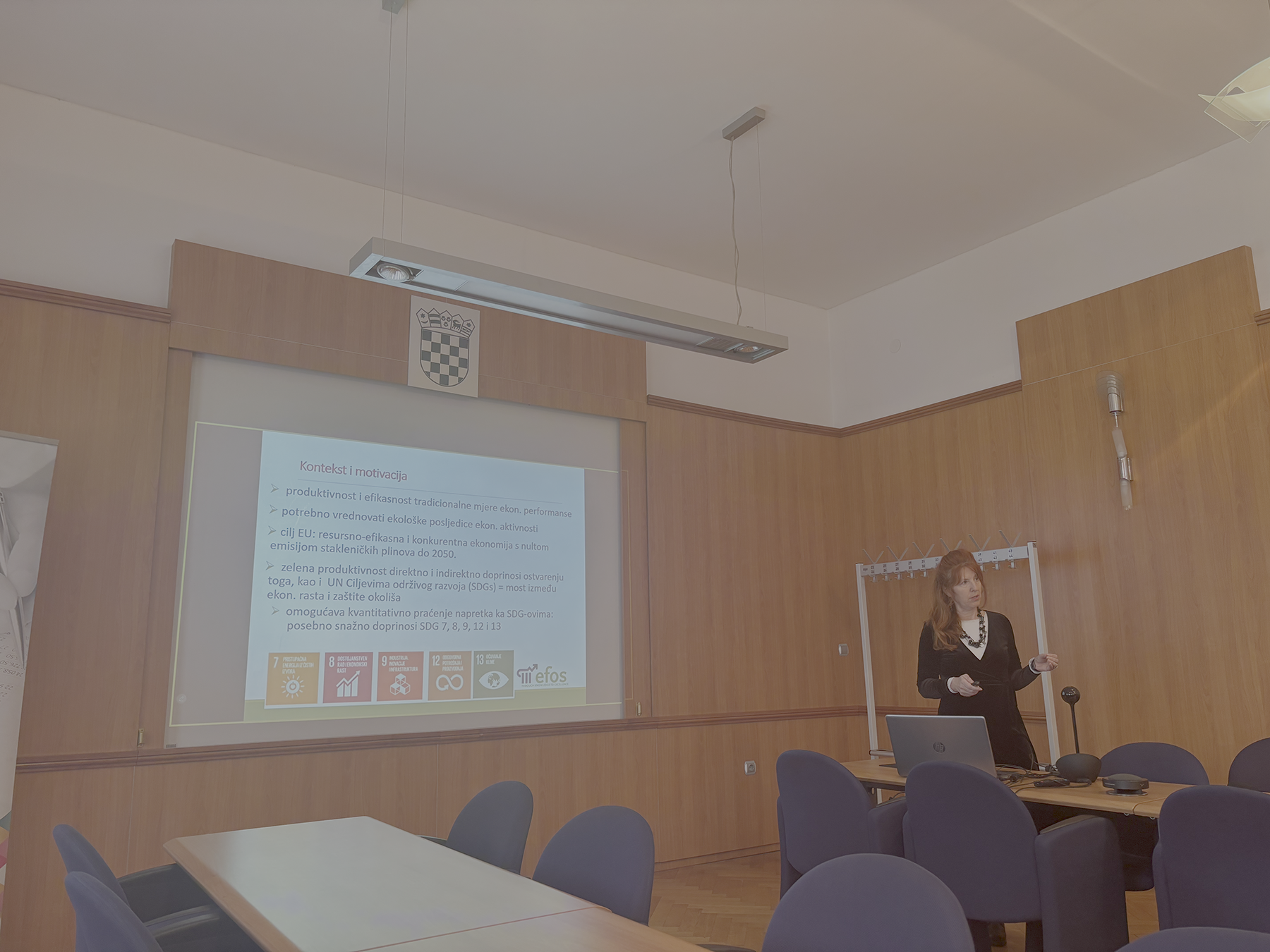
On 19 February 2026, a methodological workshop was held at the Faculty of Economics and Business in Osijek for members of the IPZET project team – Integrated Approach to the Economic Challenges of the Green Transition. The workshop was led by Prof. dr. sc. Đula Borozan and was dedicated to the methodological challenges of calculating and interpreting green technical efficiency and total factor productivity.
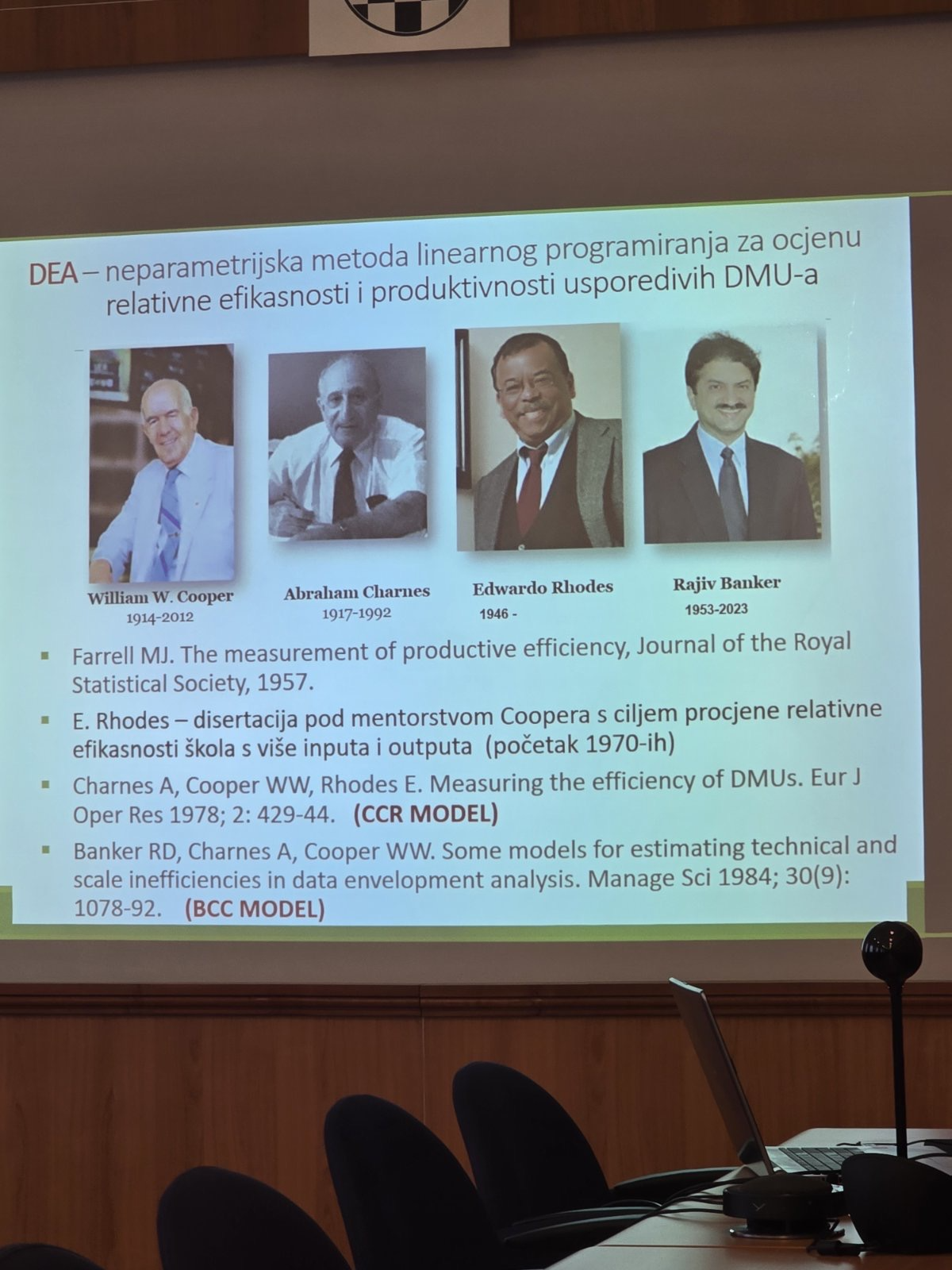
During the workshop, participants were introduced to key methodological concepts relevant to the implementation of the project’s research, including the Data Envelopment Analysis (DEA) method and the Malmquist-Luenberger productivity index as tools for measuring green total factor productivity while accounting for undesirable outputs such as CO2 emissions. The practical part of the workshop included an example of calculating technical efficiency using the Stata statistical software.
The workshop was conducted as part of the planned activities for the first year of the project, with the aim of standardising the methodological knowledge and skills of the research team members as a prerequisite for the execution of the planned studies.
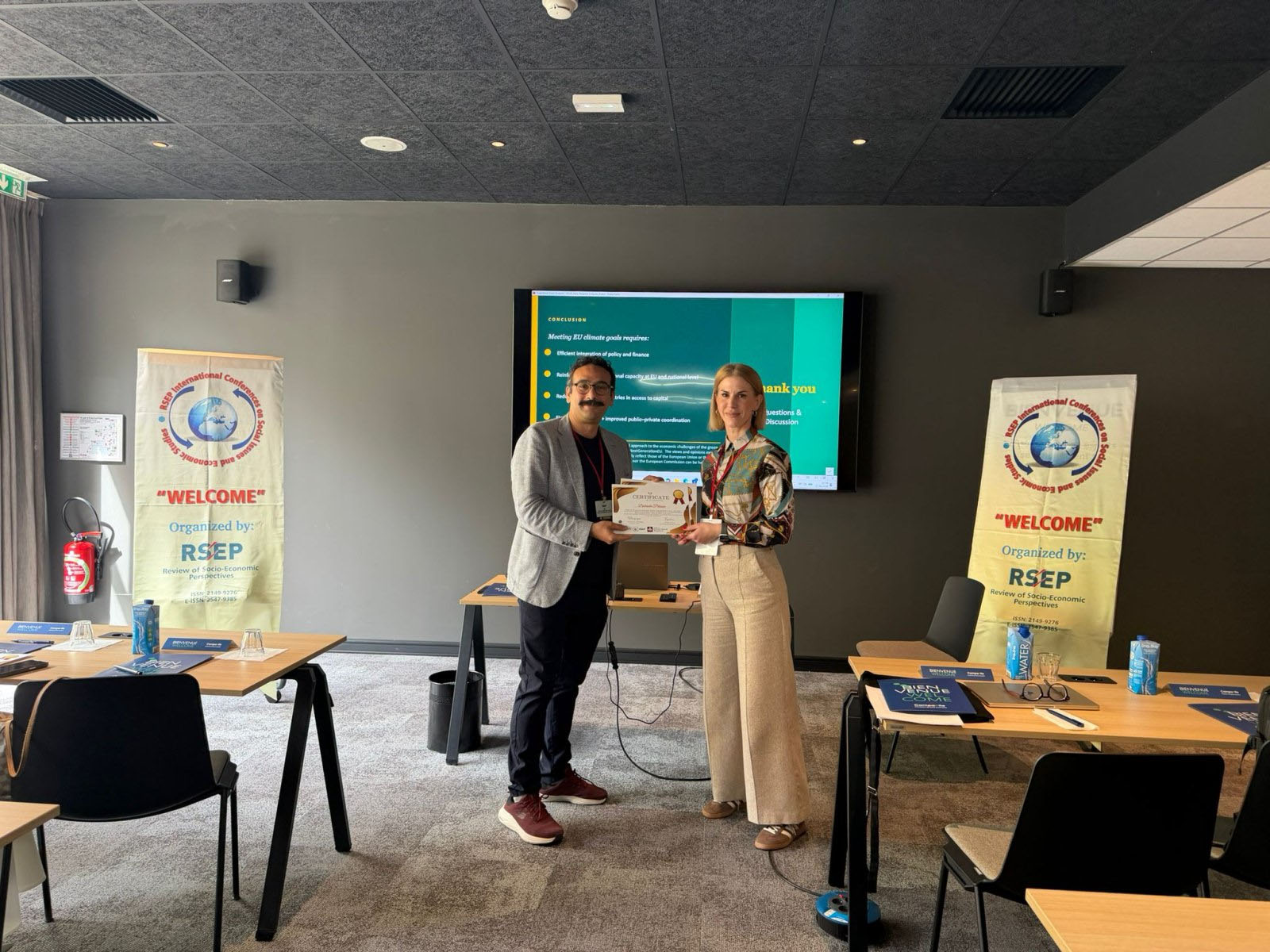
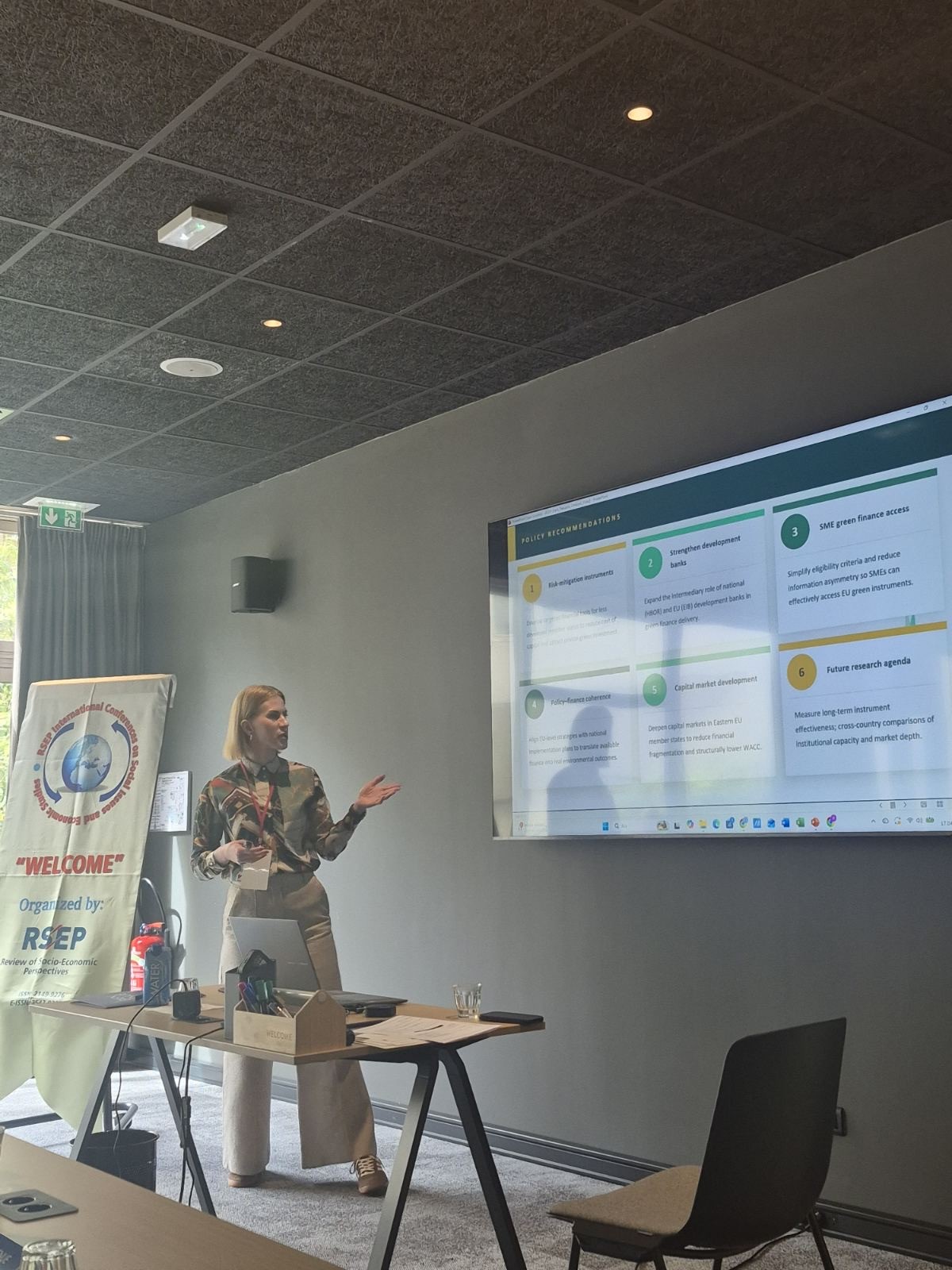
Prof. Dr. Sc. Dubravka Pekanov and Prof. Dr. Sc. Ivana Fosić presented a paper at the 46th International RSEP Conference in Paris.
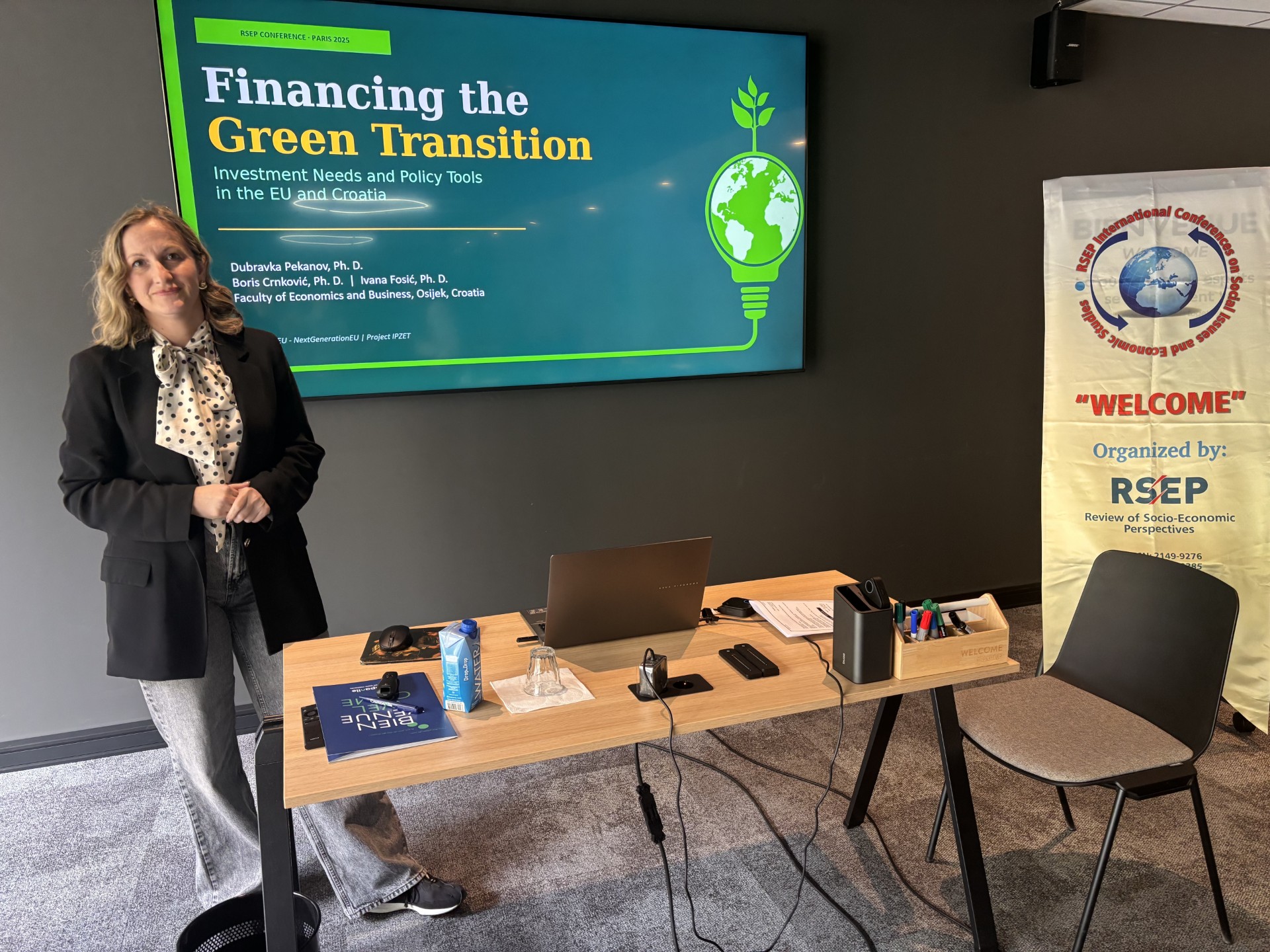
Prof. Dr. Sc. Dubravka Pekanov and Prof. Dr. Sc. Ivana Fosić presented the paper „Financing the Green Transition: Investment Needs and Policy Tools in the EU and Croatia" at the 46th RSEP International Conference on Economics, Finance and Business, held on April 17th and 18th, 2026, in Paris. The paper was co-authored with Prof. Dr. Sc. Boris Crnković.
The research investigates the financial dimension of the green transition, focusing on investment needs and financing instruments at the EU and Croatian levels. The research results indicate that financing, rather than regulation, is the main obstacle to achieving climate goals; the estimated annual investment gap amounts to at least 406 billion euros, and structural reasons lie in the uneven distribution of capital and differences in financial market development among member states. It is particularly emphasized that countries like Croatia face capital costs several times higher than the Western European average, creating a risk of a „two-speed" transition within the EU and highlighting the importance of institutional capacity for the effective use of available EU funds.