On June 30, 2026, Alberta College and the Josip Juraj Strossmayer University of Osijek, Faculty of Economics in Osijek, successfully completed their Erasmus+ small partnership project focused on enhancing vocational education programs in the field of management and administration through the introduction and application of artificial intelligence, digital tools, and their alternatives in the learning process (No. 2024-2-LV01-KA210-VET-000280127.
The project's goal was to research, introduce, and apply modern, internationally relevant artificial intelligence and digital tools, as well as their alternatives, based on cloud technologies and freely available sources, with the participation of international experts and industry practitioners, to improve vocational education programs in the field of management and administration. The project contributed to the digital transformation of educational institutions by strengthening the capacity of teachers, students, and society to use innovative digital solutions in an international environment, thereby improving their competitiveness in the global labor market, while simultaneously enhancing the content of Albert College's short vocational programs.
International Conference
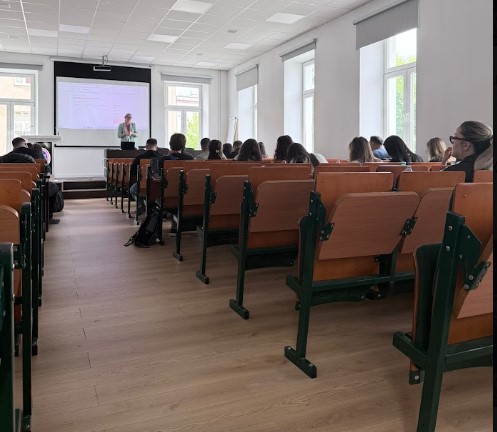
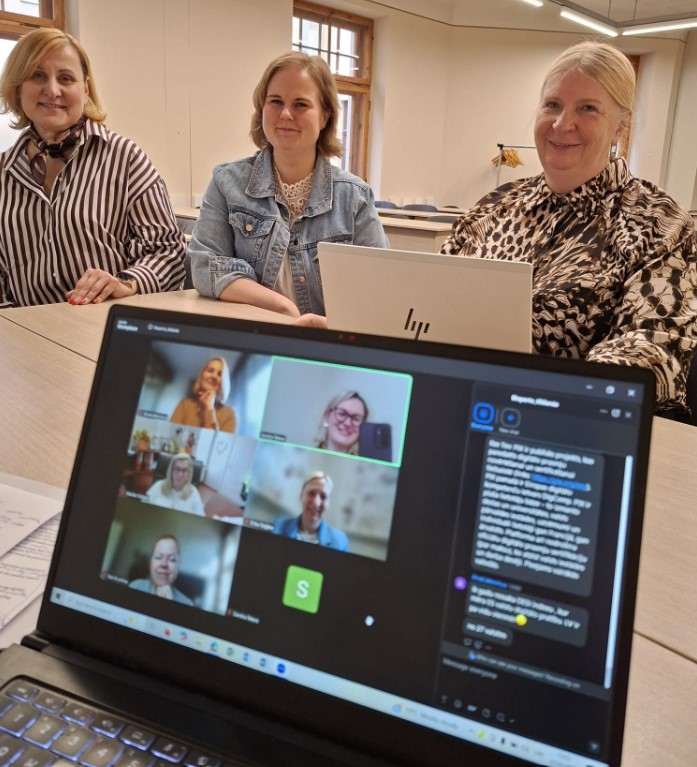
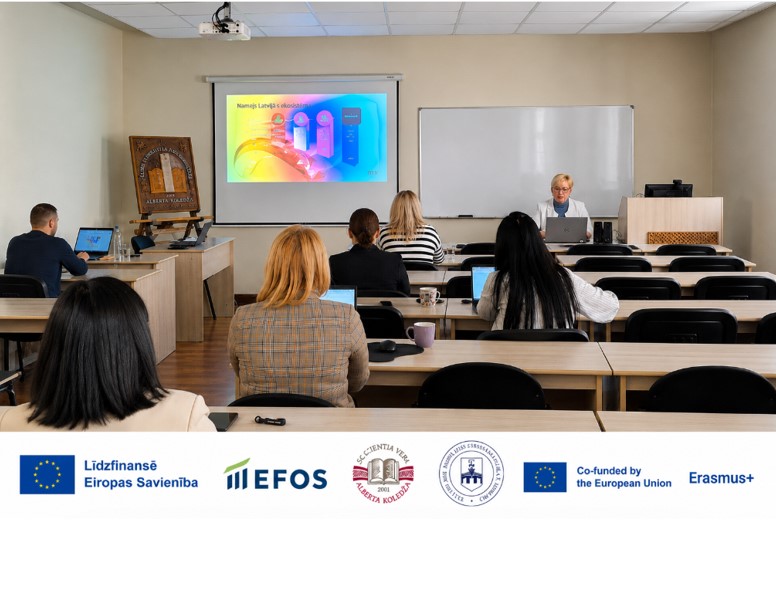
One of the key project activities took place on May 15, 2026, when Alberta College organized an open international conference in a hybrid format – in-person and online – in Latvian and English. The conference brought together 47 participants representing vocational and higher education institutions, including students, businesses, and other interested organizations.
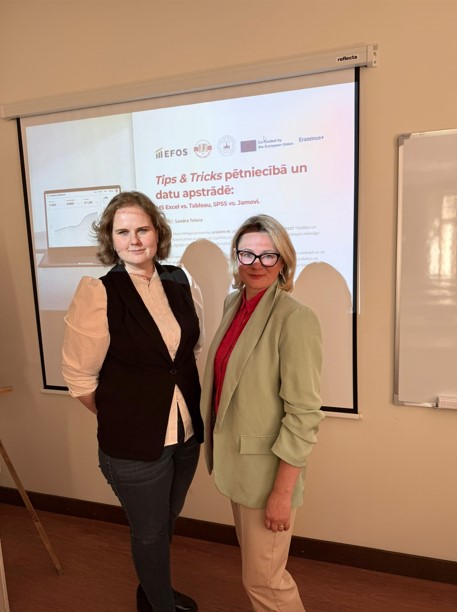
In the first part of the conference, participants were presented with digital solutions and artificial intelligence tools that are currently relevant in the job market, including MONEO, Namejs, Jamovi, Tableau, Zoho, Gamma, Grammarly, and several other digital solutions. The presentations showcased document management systems, enterprise resource planning (ERP) systems, financial document processing solutions, data analysis and visualization tools, digital research solutions, the use of artificial intelligence for creating presentations and other content, improving academic writing, as well as tools for more efficient communication, collaboration, and work organization. Speakers also shared practical examples of applying these solutions in the daily operations of businesses and educational institutions.
After the presentation, participants had the opportunity to practically try out the showcased solutions in an interactive „Digital Sandbox”. During these workshops, participants could ask questions, explore tool functionalities, and assess their potential application in their study process and professional practice. Participant feedback confirmed that the greatest added value came from the opportunity to become familiar with the MONEO, Namejs, and Zoho platforms. Although these tools are not freely available, the ability to work with similar systems is becoming increasingly important in today's job market, as they are widely used for enterprise management, customer relationship management (CRM), document workflow, and business process management.
Research and Results
These trends have also been confirmed by a study developed within the project „Bridging the Digital Skills Gap: Business-Oriented Digital Tools and AI in Management and Administration Education”. The research results served as a foundation for shaping the conference program and showed that employers expect much more than knowledge of office programs or word processing applications. Competencies in using Customer Relationship Management (CRM) systems and Enterprise Resource Planning (ERP) systems, data analysis and visualization tools, document management systems, self-service portals, and artificial intelligence solutions that help streamline business processes and data-driven decision-making are increasingly emphasized.
The study employed both qualitative and quantitative research methods. One of the most important data collection phases was a focus group interview organized on March 27, 2026, which brought together 16 experts from the field of management and administration—eight from Latvia and eight from Croatia. The experts' insights allowed for the identification of the most relevant digital skills required in the labor market and the exploration of opportunities to integrate these competencies into higher education study programs.
Project results
The results achieved during the project implementation significantly exceeded the initial goals. Three existing courses at Alberta College have been updated, and three new elective courses have been developed that incorporate digital solutions and artificial intelligence tools into their curricula. The project also produced a range of digital teaching materials, including two video tutorials on using JASP and Tableau, methodological materials for three courses, and a comprehensive guide showcasing 30 digital tools that can be used in higher education programs in the field of management and administration.
During the project, special emphasis was placed on international cooperation, exchange of experience, dissemination of project results, and knowledge and good practice transfer. Members of the Alberta College project team participated in training activities organized by the Faculty of Economics in Osijek, as well as in international seminars and Erasmus+ Blended Intensive Programme (BIP) programs held in Georgia and Poland, further promoting knowledge and project result transfer. The project results were presented at several international conferences and methodological events, including EKA Research Week, methodological conference „Digitally and Ethically Enhanced Education”, EKA ETECH Conference the international conference organized by Alberta College, „Digital Solutions for Business, Research, and Productivity”.
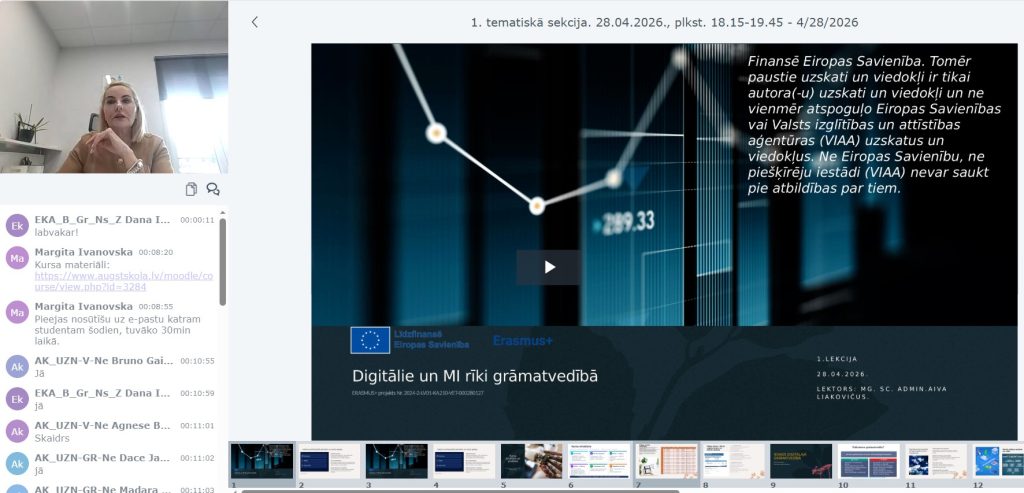
In addition, students and staff at Alberta College had the opportunity to participate in a series of conferences „Digital and AI Solutions for Financial and Administrative Process Management”, which was held from April 28 to June 17, 2026, through seven thematic sessions. In total, more than 200 students participated in the mentioned events.
Wider effect
Project results go beyond organizing conferences and seminars. The project also resulted in an international scientific publication. „Developing Technological Competencies in International Higher Education Through Technology-Enhanced and Multimodal Learning”, methodological materials, two video tutorials on using Jamovi and Tableau, and practical examples of applying artificial intelligence and digital tools in the learning process.
The project's final activities contributed to strengthening digital competencies for over 300 participants from more than five countries. Among them were higher education teachers, students, company representatives, and other interested stakeholders who expanded their knowledge of artificial intelligence, data analysis, enterprise resource planning systems, and other digital solutions for use in educational and professional settings.
The experience gained during the project confirmed that the development of digital competencies is most effective when the learning process includes not only freely available tools but also professional digital platforms widely used in business. This allows students to acquire skills that are in demand in the labor market and supports their successful integration into the professional environment. The materials developed within the project will be valuable for higher education teachers, adult education specialists, and other stakeholders who wish to strengthen the development of digital competencies in their educational programs.
The results of the Erasmus+ project show that improving educational programs in the field of management and administration is not possible without continuous cooperation with employers and international partners. Aligning curricula with labor market needs, integrating digital and artificial intelligence tools into the learning process, and promoting the professional development of teachers contribute to preparing competitive graduates and strengthening the quality of vocational higher education.
The study developed during the project, along with its results, methodological materials, video instructions, and other project outcomes, is available at EPALE Resource Centre on the Alberta College website.
Funded by the European Union. However, the views and opinions expressed are those of the author(s) only and do not necessarily reflect those of the European Union or the State Education Development Agency (hereinafter – VIAA). Neither the European Union nor the granting authority (VIAA) can be held responsible for them.