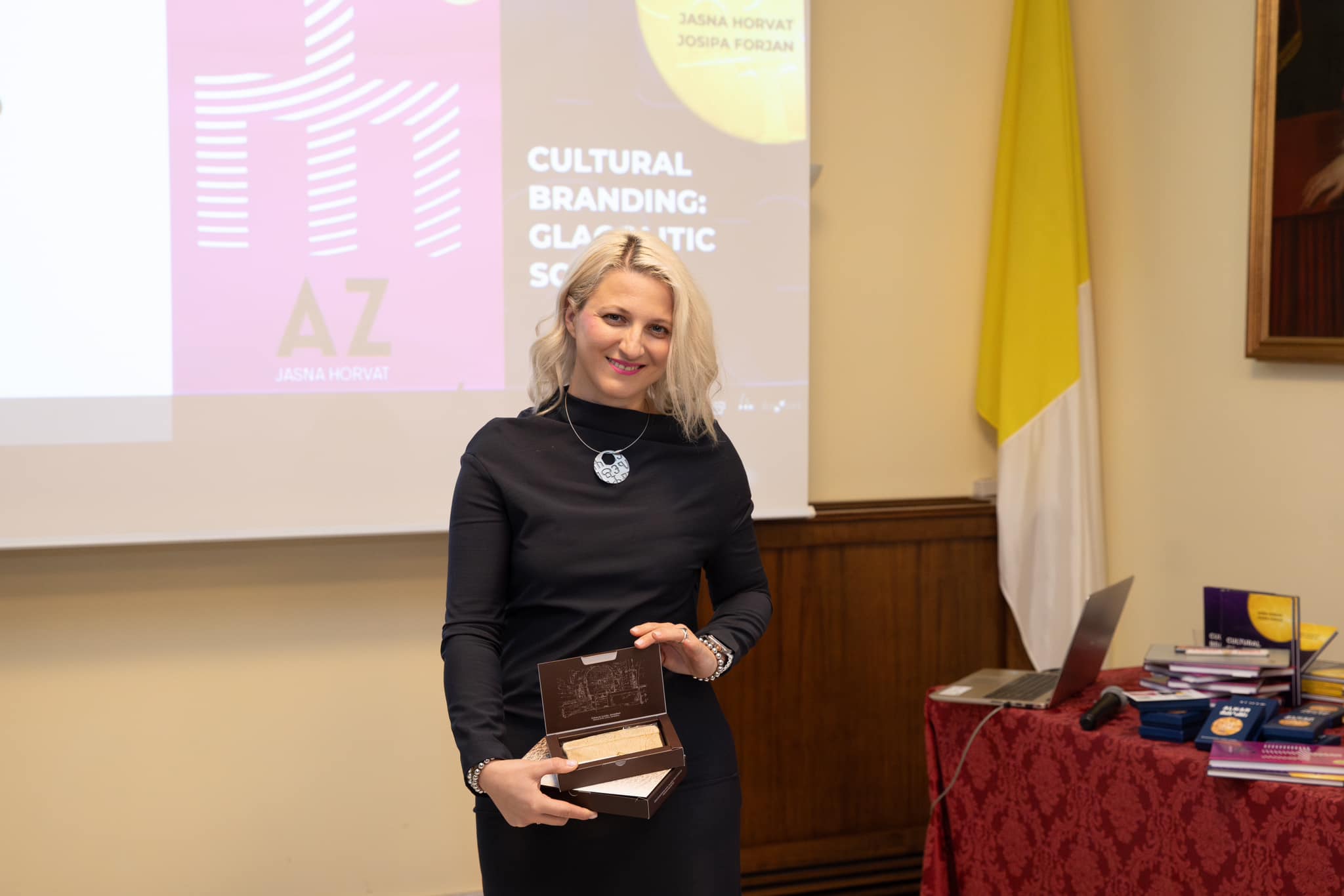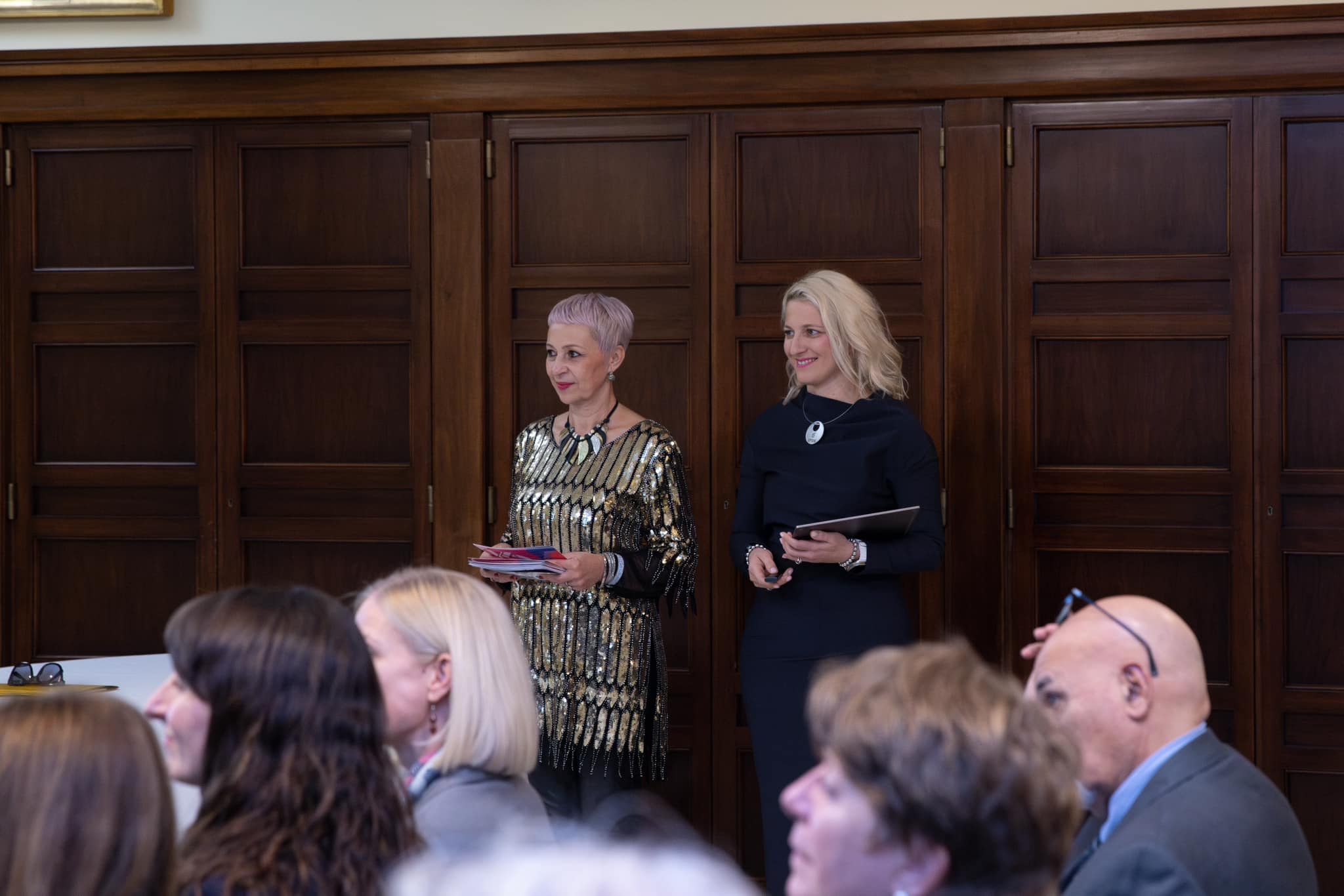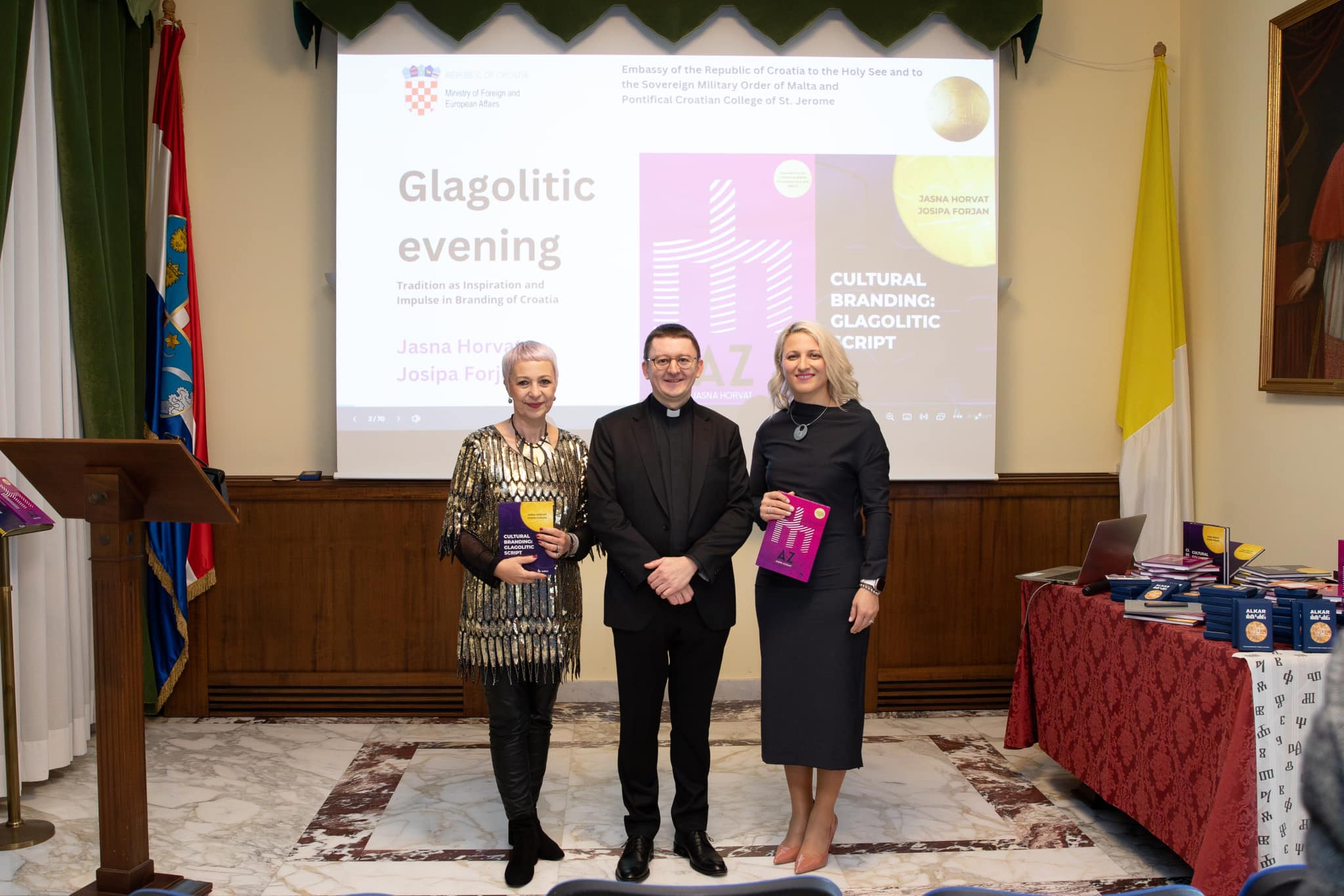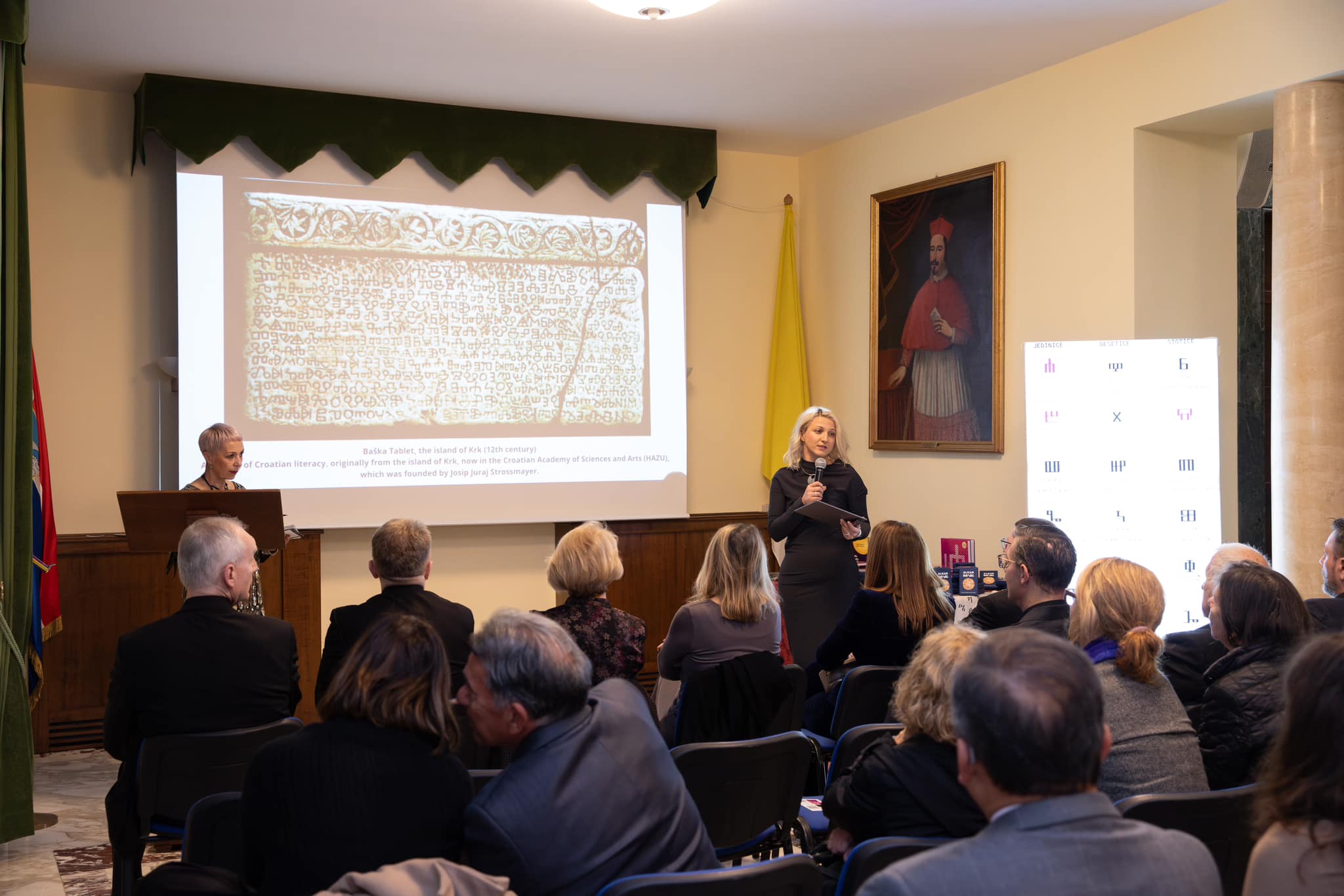
Under the auspices of the Ministry of Foreign and European Affairs, and organized by the Embassy of the Republic to the Holy See, on November 12, 2024, Prof. Dr. Sc. Jasna Horvat and Professor, Doctor of Science. Josipa Forjan They presented the role of Josip Juraj Strossmayer University in branding the Republic of Croatia through culture. Presentation of the title “Evening of Glagolica” It was held in the evening in English at the Papal Croatian Seminary of St. Jerome.
The importance of this event was confirmed by the presence of high-ranking dignitaries, among whom were monsignors. Peter Rajič, apostolic nuncio to Italy and San Marino, Tea Zupičić, Chargé d'Affaires of the Embassy of the Republic of Croatia to the Holy See, Msgr. Janusz Błachowiak and mons. Hrvoje Škrlec from the Secretariat of State of the Holy See, Fr. Bernard Ardura Oh. Premier., president emeritus of the Pontifical Committee for Historical Sciences, as well as numerous ambassadors and other representatives of the diplomatic corps to the Holy See and members of the Croatian community in Rome.
Welcome Address by the Dean of the Faculty Marka Đurina She drew visitors' attention to a coincidence spanning 62 years. Namely, during the Second Vatican Council at St. Peter's Basilica on November 12, 1962, a Mass in the Old Slavonic language was celebrated before the council fathers, led by the then Bishop of Šibenik. Josip Arnerić. Father Marko Đurin emphasized that the Croatian Church of St. Jerome and the Papal Croatian Institute of St. Jerome are the oldest institutions the Croatian people have outside their homeland, with their founding dating back to the 15th century.
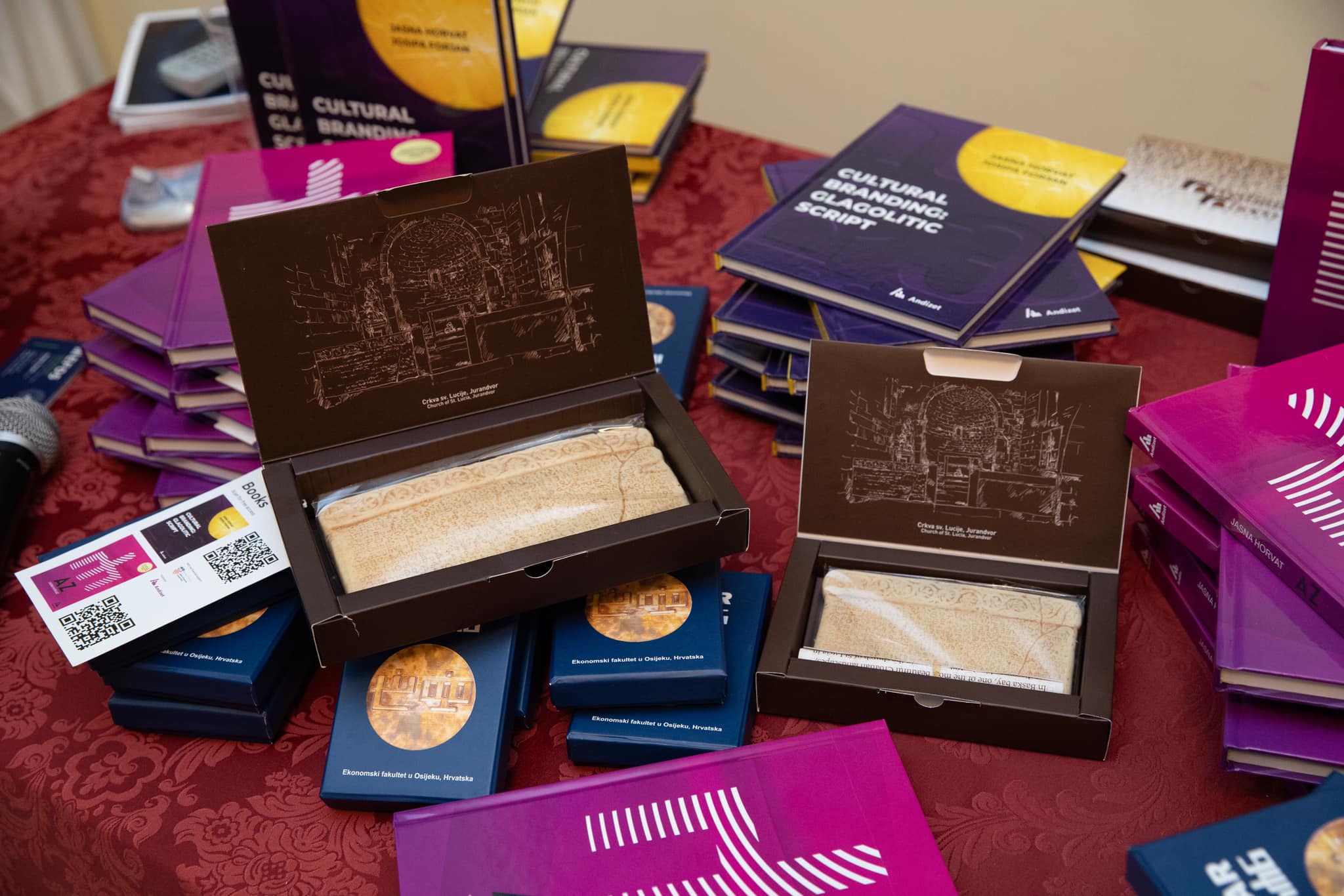
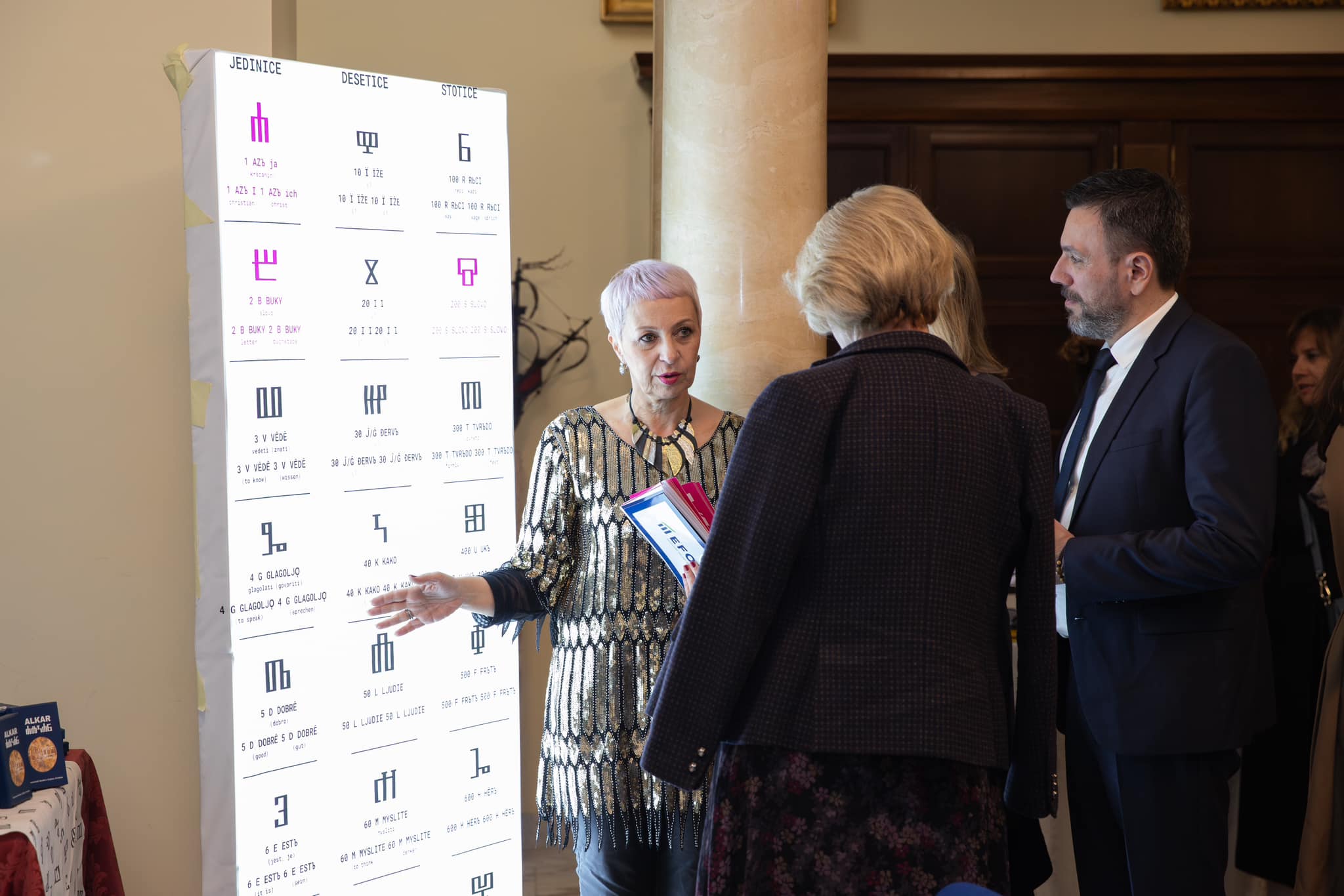
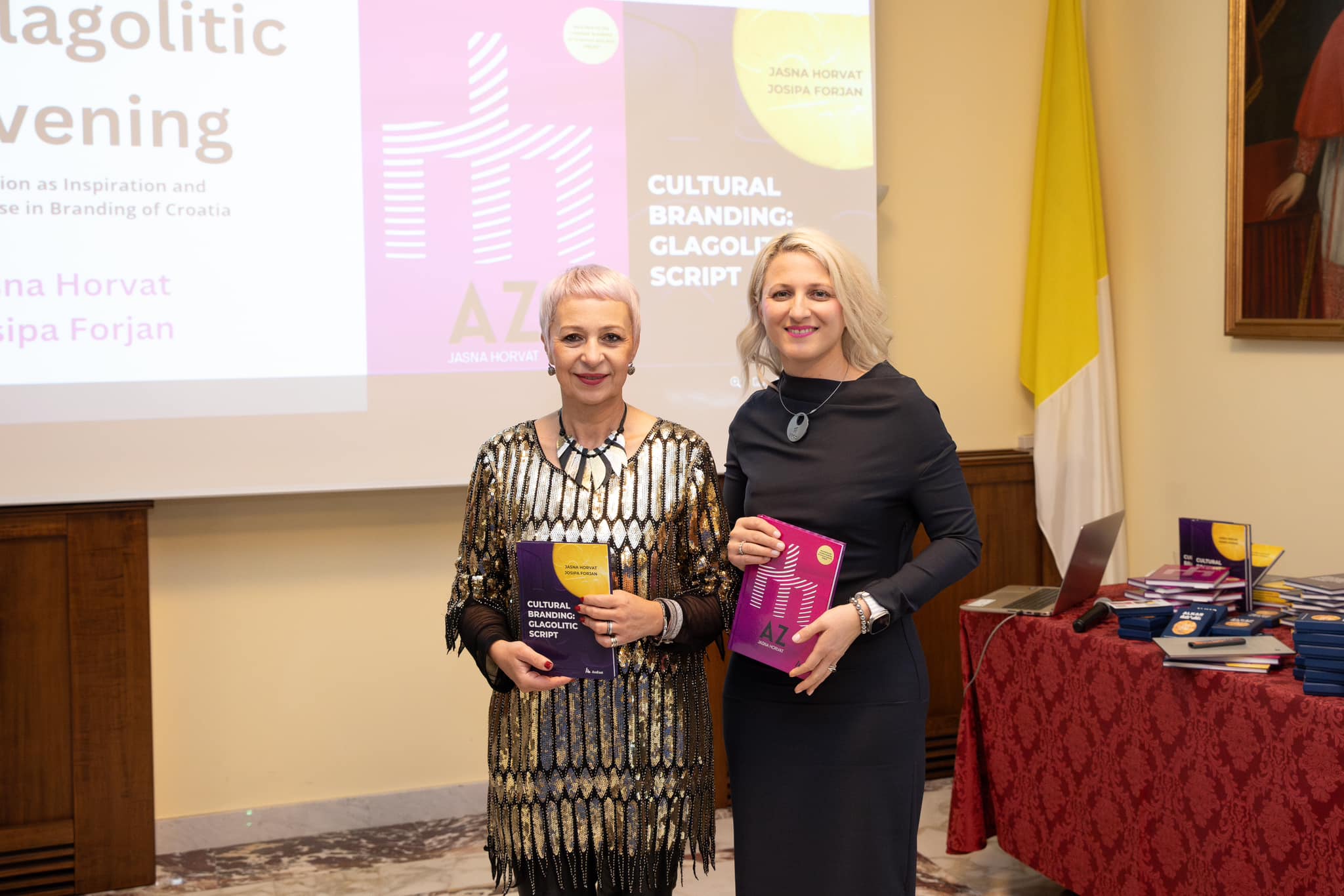
She also greeted the guests in attendance. Andreja Metelko-Zgombić, Secretary of State of the Ministry of Foreign and European Affairs of the Republic of Croatia. After the Secretary of State's remarks, the program began. Evenings of Glagolitic which, in addition to the lecture portion, included an exhibition Cyrillic Cyrcle Creativity and the presentation of English translations of books by Osijek-based scientists. It is a novel. AzJasne Horvat and the scientific research study Culture branding: Glagolica co-authored by Jasna Horvat and Josipa Forjan, and available in open access (www.andizet.hr).
By citing the connections through which Večer glagolice brought together guests and Osijek-based scientists, Jasna Horvat highlighted the role of Josip Juraj Strossmayer, a native of Osijek and the founder of the Croatian Academy of Sciences and Arts. She emphasized that the Osijek University is the only one named after the Croatian dignitary, and is therefore the only public university in the Republic of Croatia that successfully brands its own tradition. Building on these insights, Jasna Horvat described the role of Josip Juraj Strossmayer in her award-winning novel Az Dedicated to the Glagolitic alphabet and Saint Constantine Cyrillic, the patron saint of Europe and creator of the Glagolitic alphabet.
Josipa Forjan presented the project described in the book. Culture branding: Glagolica. She highlighted the novel. Az Jasne Horvat as a starting point in a ten-year development Model of circular creativity whose goal is to offer solutions on “how to conquer with the Cyrillic alphabet in the new millennium” and to brand the Faculty of Economics in Osijek, Josip Juraj Strossmayer University, the city of Osijek, and the Republic of Croatia with culture.
Interested guests had the opportunity to learn about a third of the projects stemming from the development of the Model of Circular Creativity, which was established and experimentally validated at the Faculty of Economics in Osijek. This is the Aula Glagolitica, the central space of the Faculty of Economics in Osijek, which connects the modern era with the symbolic values of Glagolitic characters, their messages, and the centuries-long genesis of the Glagolitic script. Then came the Human Sundial of the Faculty of Economics in Osijek, whose key elements are the numerals for the hours written in Glagolitic, The Glagolyon game, installed in the spaces of the Faculty of Economics in Osijek; the Ave medal created for the celebration of the 60th anniversary of the Faculty of Economics in Osijek; and Virtual Alkar – an application for the virtual visualization of Glagolitic characters.
Before inviting visitors to the exhibition opening Glagolitic in circular creativity, The authors recalled the methodical ingenuity of the Glagolitic alphabet, which simultaneously literates and spreads Christianity, that is, expands knowledge and brands the fundamental idea. They emphasized that they explore this effect in their research and teaching, and that its application is already confirmed today in marketing, methodology, and information sciences. In the closing thought, Pope Francis was quoted as saying that on November 5, 2024, during a visit to the Pontifical Gregorian University, he urged that universities must be “houses of the heart,” with fewer static lecture halls and more round tables where everyone involved is a “beggar for knowledge who touches the wounds of history.” In keeping with these thoughts, the guests were invited to share their experiences and reflections alongside the exhibits on display. Glagolitic in circular creativity.